What Is a DSCR Loan? A Bozeman Investor’s Guide
If you are buying investment property in Bozeman or the Gallatin Valley, you have probably heard of DSCR loans. They are one of the financing tools investors reach for when rental income—not W-2 paystubs—is what makes the deal work. Here is a clear, local take on what they are, who they fit, and when it is worth talking through the numbers with a loan officer who knows this market.
What DSCR Actually Means
DSCR stands for Debt Service Coverage Ratio. In plain English, lenders look at whether the property’s expected rental income can cover the mortgage payment (principal, interest, taxes, and insurance—often called PITI). Instead of qualifying you primarily on personal income the way a conventional owner-occupied loan does, a DSCR loan puts the property’s cash flow front and center.
Think of it as asking: does this rental support the debt on its own? That framing is why DSCR products are popular with investors building a portfolio of long-term rentals or short-term stays.
Who DSCR Loans Are For
These loans are designed for investment properties—houses, duplexes, and similar rentals you do not plan to live in as your primary residence. They often appeal to:
Investors whose personal income looks complex (self-employed, multiple businesses, or uneven W-2 history).
Buyers adding a second, third, or more rental while keeping personal debt-to-income from blocking the next purchase.
Owners considering short-term rental (STR) or long-term rental (LTR) strategies in places like Bozeman, Belgrade, Gallatin Gateway, and Big Sky–adjacent markets—where strong seasonal demand can support healthy rents when the property and management are right.
They are not a first-time homebuyer or down-payment-assistance product. If you are buying the house you will live in, conventional, FHA, VA, or similar owner-occupied options are usually the right conversation—not DSCR.
How DSCR Differs From Conventional Owner-Occupied Loans
With a typical owner-occupied mortgage, underwriters lean hard on your personal income, credit, and debt ratios. The home’s rental potential is secondary (or irrelevant if you will occupy it).
With a DSCR loan, the property’s rental income relative to the proposed payment is the star. Personal income documentation may be lighter or structured differently depending on the program, while credit, reserves, down payment, and the property itself still matter. Terms, pricing, and guidelines vary by lender and investor guidelines—so treat any “rule of thumb” as a starting point for a real quote, not a promise.
Why It Matters in Bozeman and the Gallatin Valley
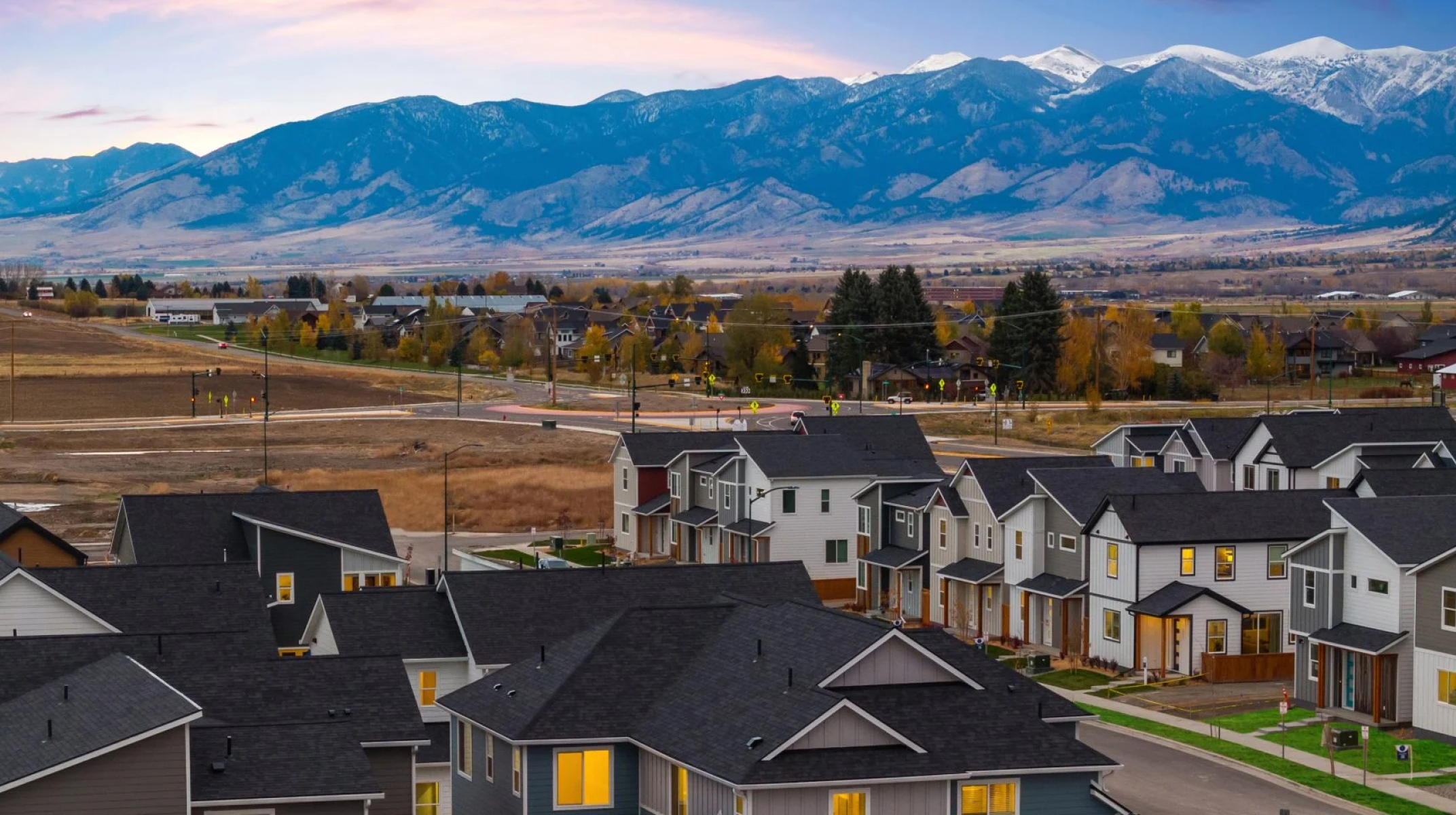
Bozeman and the surrounding valley attract buyers who want land, lifestyle, and income-producing real estate. Inventory can be competitive, prices reflect mountain-town demand, and many investors look at rentals that serve MSU, Big Sky visitors, remote workers, and year-round locals.
That mix is exactly where DSCR thinking shows up: you are underwriting the asset as a business. A cabin near trailheads, a duplex near campus, or a well-managed STR with clear rules and solid reviews—each needs rents that can support debt after realistic vacancy, utilities, and management costs. A local loan officer and Realtor who understand both financing and this market can help you stress-test the deal before you write an offer.
How Qualification Works (Conceptually)
At a high level, lenders estimate monthly rental income (from leases, market rent comps, or STR projections, depending on the program) and compare it to the monthly debt service on the loan. The resulting ratio is the DSCR.
Programs typically look for rental income at or above the payment—sometimes with a minimum ratio requirement. Exact thresholds, how they treat short-term vs. long-term rents, and what documentation they want differ by lender. You will also usually see requirements around credit score, down payment or equity, cash reserves, and property type. None of those numbers are universal, and inventing a “magic ratio” in a blog post would be misleading—so the useful next step is a scenario review with someone who can run your actual purchase price, rate environment, and rent assumptions.
Pros and Cons in Brief
Pros: Can unlock investment purchases when personal DTI is tight; focuses on the property’s performance; useful for scaling a rental portfolio; can fit STR or LTR strategies when income documentation supports the program.
Cons: Often carries different pricing and down-payment expectations than owner-occupied loans; not every property or borrower profile fits; STR income can be more variable and may be underwritten more carefully; guidelines change, so what worked for a peer last year may not be identical today.
When to Talk to a Local Loan Officer
Reach out early—ideally before you are deep in an offer—if you are:
Comparing a conventional investment loan vs. a DSCR structure on the same property.
Buying or refinancing a Bozeman-area rental and want to know whether projected rents support the payment you have in mind.
Weighing STR vs. LTR and need financing that matches how the property will actually be used.
Self-employed or have a layered income picture and want clarity on documentation before you shop homes.
Amy Hyde works with Bozeman and Gallatin Valley clients as a Branch Manager, Loan Officer, and Realtor through Hyde Montana. That combination means financing and the real estate side of the deal can stay in sync—useful when timing, comps, and loan structure all have to line up.
Ready to Run Your Numbers?
A DSCR loan is simply a way to finance investment property with the rental’s ability to cover the debt at the center of the conversation. It is not a guarantee of approval, and it is not the right tool for every buyer or every house.
If you are exploring a rental purchase or refinance in Bozeman, Belgrade, Gallatin Gateway, or nearby, reach out to Hyde Montana / Amy Hyde. We can walk through your scenario, explain how current investor programs may apply, and help you decide whether DSCR—or another path—fits your goals. Educational guidance first; your next move, your way.